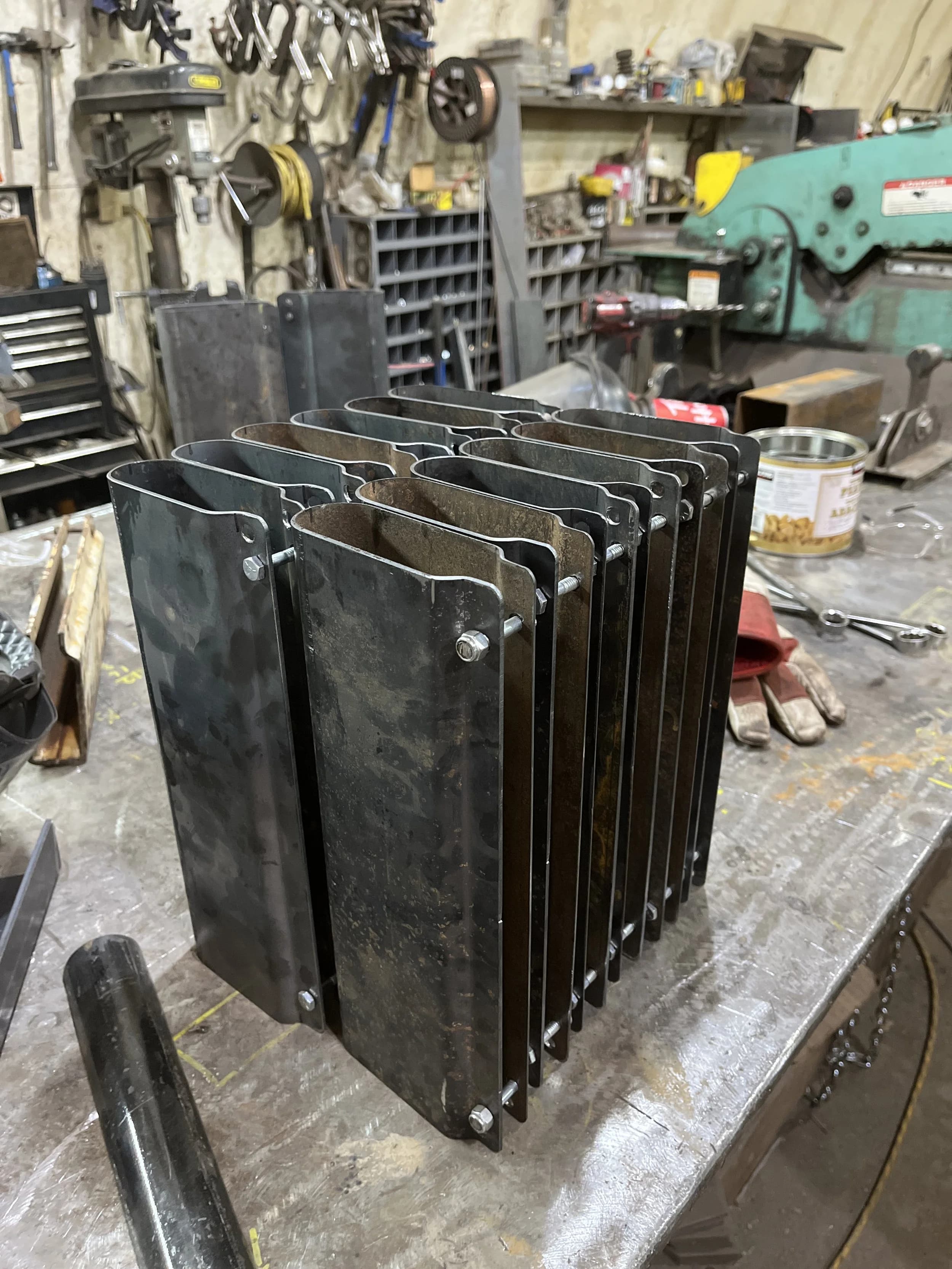
When a weld holds up a mezzanine, carries a load down the highway or seals a vessel under pressure, “looks fine” isn’t good enough. CWB certification is how you prove — on paper, and under audit — that the welds leaving our shop meet a national standard. Infinity Metalworks is certified by the Canadian Welding Bureau to CSA Standard W47.1, and that certification underpins the structural and industrial work we do every day.
What CWB certification actually means
The Canadian Welding Bureau (CWB) administers certification to CSA W47.1, the national standard for the fusion welding of steel. Certification isn’t a one-time sticker — it’s an ongoing commitment that touches the people, the procedures and the shop itself. A company can’t simply claim it; it has to earn it and keep earning it.
For a client, the practical meaning is simple: a certified shop has been independently vetted to produce welds that meet a recognized engineering standard. That’s the difference between a weld you hope is sound and a weld that’s backed by a documented, audited quality system.
The three pillars
CWB certification rests on three things working together:
- Qualified welders — every welder passes individual qualification tests for the positions and processes they work in, and those qualifications are tracked and renewed.
- Approved welding procedures — the shop develops and submits Welding Procedure Specifications (WPS) that are formally accepted by the CWB, so the right heat, filler and technique are documented for each joint.
- Ongoing audits — the CWB audits the shop on a recurring basis, reviewing records, personnel and practices. Certification lapses if the standard slips, which keeps everyone honest.
Which industries require it
Plenty of jobs specify CWB certification as a condition of the contract. Structural steel for buildings and platforms, oilfield and gas-processing equipment, agricultural and commercial fabrication, and public infrastructure work commonly require a certified shop. Engineers, general contractors and safety departments often won’t accept welded work without it — because their own liability depends on it.
Even where it isn’t strictly mandated, specifying a certified shop is a low-risk decision. It signals that the fabricator takes traceability and repeatability seriously, not just on the showcase jobs but on every ticket that comes through the door.
What we bring to the table
At our Weyburn shop we pair certification with the equipment to back it up. We weld mild steel and aluminum across a range of thicknesses, cut and prep material in-house on our 5′×10′ plasma table, and form assemblies on a 175-ton press brake — so the whole job, from raw plate to finished, certified weldment, stays under one roof.
That integration matters. When cutting, forming and welding are all controlled by the same team, fit-up is tighter, distortion is easier to manage and there’s no finger-pointing between vendors when something needs to be right.
How the certification process works
Getting and keeping certification is deliberate work. Welders are tested and re-tested against the standard. Procedures are written, qualified and submitted for approval before they’re used on certified work. Records — of who welded what, with which procedure — are maintained so any weld can be traced back through the system. And the CWB returns to audit that all of this is genuinely happening, not just filed away.
Why it should matter to you
Certification protects you. It reduces the risk of a failed weld, gives you documentation for insurers and inspectors, and means the shop building your equipment is accountable to more than its own word. For anything load-bearing, pressurized or safety-critical, that peace of mind is worth far more than the marginal cost.
Serving Southeast Saskatchewan
We’re on Hwy 35 in Weyburn, serving farms, oilfield operators and businesses across Southeast Saskatchewan. If your project calls for certified welding — or you’re not sure whether it does — call the shop and we’ll walk you through it.